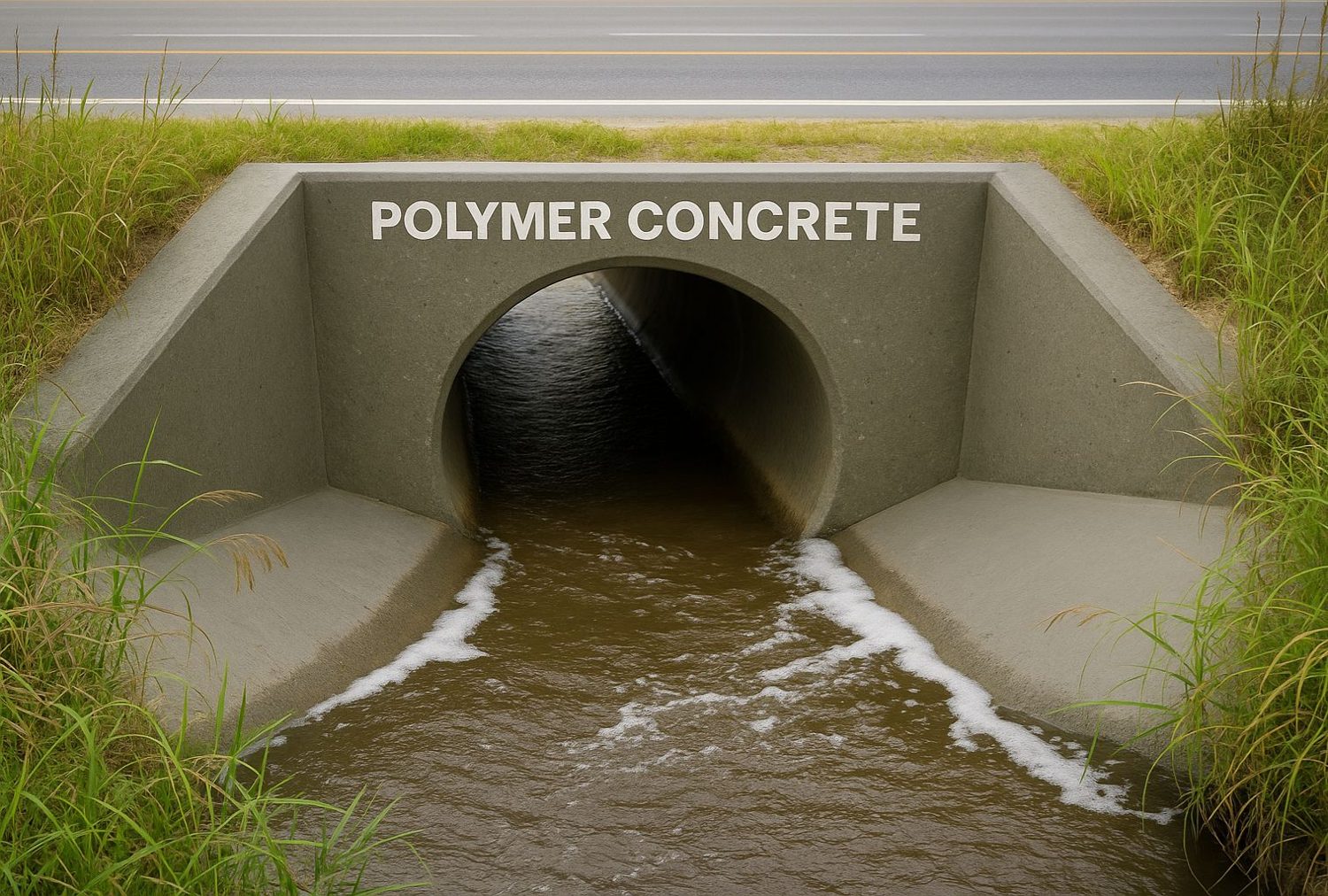
No cement. No steel. A resin-bonded composite engineered at the material level to reach 120 MPa, resist corrosion completely, and last beyond a century.
Ordinary concrete relies on cement and steel — and both eventually fail. Polymer concrete replaces the binder entirely, creating a material that is stronger, lighter, and effectively immortal in conditions that destroy traditional concrete.
Add each ingredient to see how the composite forms. No water, no cement — just engineered chemistry.
Replaces cement — bonds everything at the molecular level.
High-strength mineral skeleton that carries the load.
Fills the matrix for a dense, non-porous structure.
Every property is a direct result of the resin-bonded composite structure.
Load-bearing performance rivaling reinforced concrete — with no rebar at all.
Immune to sewage gases, chemicals and saline ground that corrode cement and steel.
A dense, non-porous matrix means zero ingress, leakage or freeze-thaw damage.
Rapid resin curing accelerates both manufacturing and on-site installation.
Significantly lighter than precast concrete, easing transport and handling.
Designed to outlast generations of infrastructure with minimal maintenance.
Relative performance across the properties that matter most for infrastructure.
Traditional lined concrete manholes need rehabilitation every 10–15 years, stacking up over a 60-year life — while polymer concrete is installed once, with virtually zero maintenance.
A precision process built on proven German polymer concrete technology.
Resin, aggregate and graded sand are blended to a precise engineered ratio.
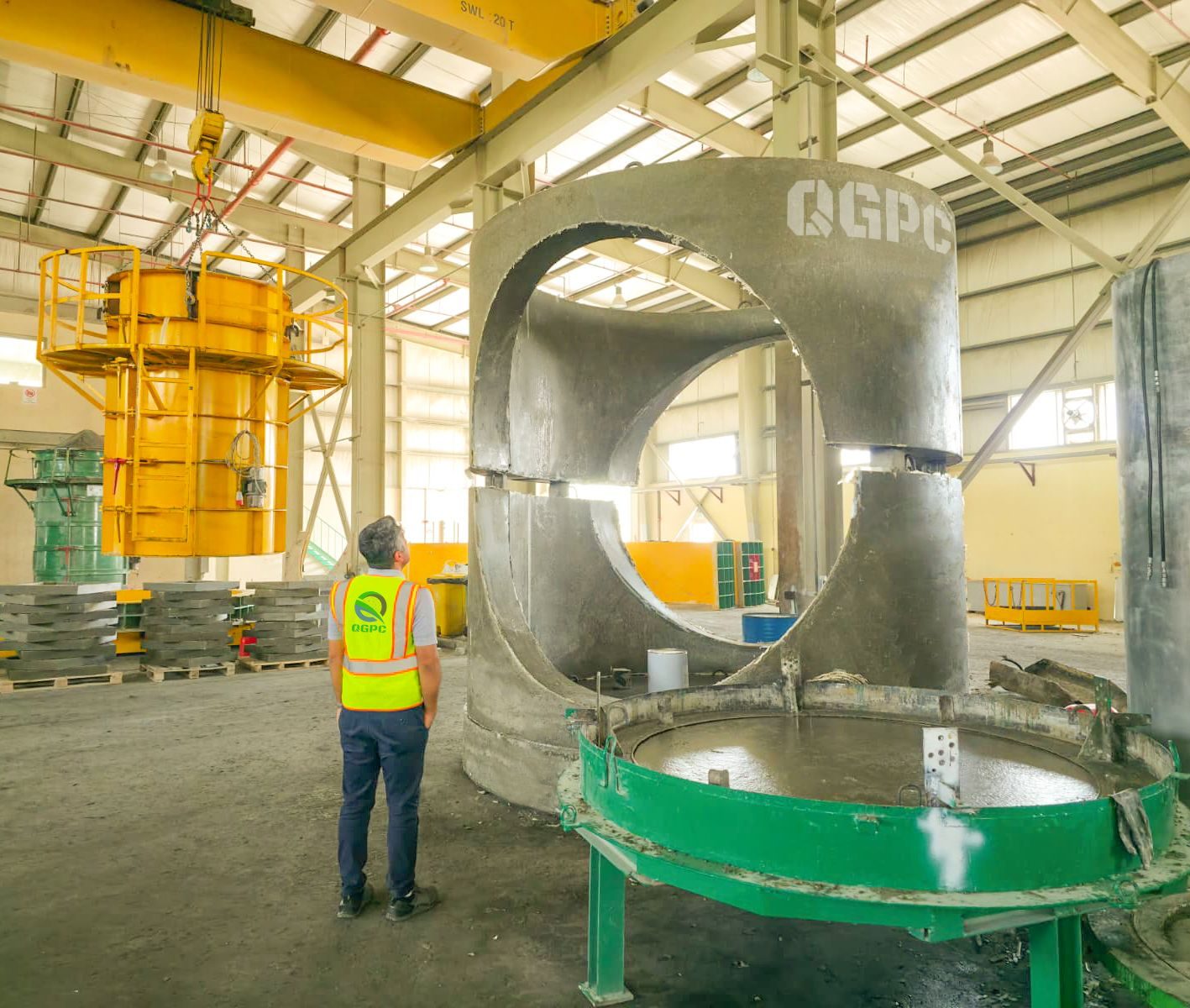
The composite is cast into manholes, chambers, pipes and channels.
Rapid resin curing locks in strength without water or thermal steaming.
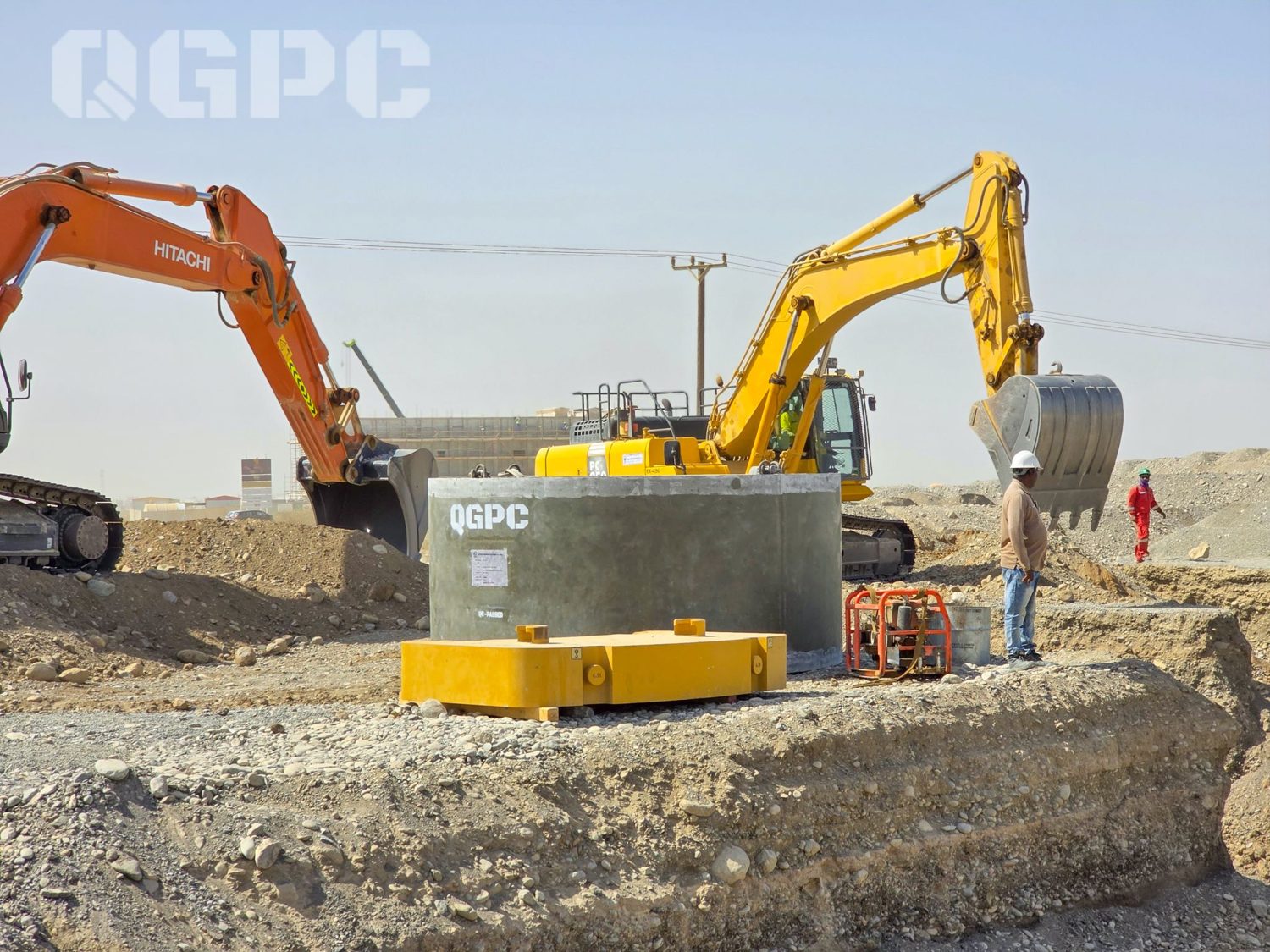
Each unit meets certified, Ashghal-approved quality standards before dispatch.
Talk to our team about specifications, approvals and supply.
Get in touch